Date and Time: 26/11/26, 5pm CET
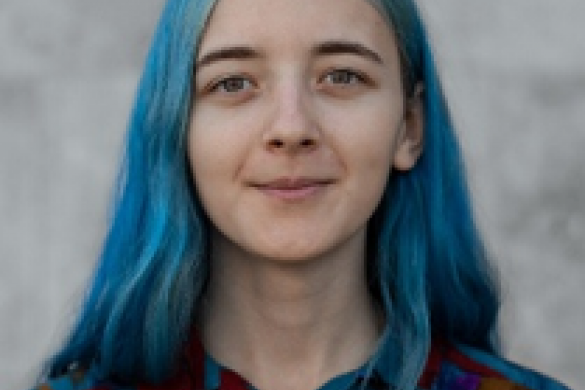
Speaker: Anna-Maria Bucur, Dalle Molle Institute for Artificial Intelligence, Università della Svizzera italiana (Italy)
Presenter: Paolo Rosso, Universidad Politécnica de Valencia (Spain)
Abstract:
The presentation explores how natural language processing can support psychological research by analyzing interactions from social media data to gain insights into mental health distress. While NLP is effective in identifying language patterns, psychology shapes research by defining key concepts, explaining their relevance, and providing a framework for interpreting findings. The presentation begins with several case studies focusing on cancer survivorship, mental health problems identification in the general population, and the exploration of happy moments among individuals diagnosed with depression, all using English language data. It then addresses cross-cultural considerations when working with data in languages other than English and evaluates LLMs for this purpose. The presentation emphasizes that theory-informed NLP can uncover psychological trajectories and can offer valuable insights for psychological interventions. However, it also highlights how the lack of quality data and evaluations poses challenges for developing methods applicable to languages beyond English.
Bio: Ana-Maria Bucur is a Postdoctoral Researcher at the Dalle Molle Institute for Artificial Intelligence (IDSIA), Università della Svizzera italiana, working in Prof. Fabio Crestani’s Information Retrieval Lab. She completed a jointly supervised PhD program between Universitat Politècnica de València and University of Bucharest, under the guidance of Prof. Paolo Rosso and Prof. Liviu P. Dinu. Ana-Maria has engaged in interdisciplinary collaborations that span psychology and digital humanities. Her research primarily focuses on Natural Language Processing NLP for mental health, particularly investigating how people express psychological states through language and how computational methods can enhance our understanding of mental health and support well-being. More recently, she has been exploring how culture influences the manifestations of mental disorders and how to develop culturally aware computational methods for more inclusive mental health screening.
Enlace a la charla: https://zoom.us/webinar/register/WN_i2j1MGK0TCStUlwD-gevgQ